Zalul is one of Israel's leading environmental NGOs dedicated to protecting the seas and rivers of Israel. Zalul accomplishes its mission through conservation, activism, research, awareness-raising, and education. Zalul challenges Israel's existing power structure and strives to bring the issues of water preservation and environmental protection to the forefront of the Israeli public. Zalul was founded in 1999 by a few concerned citizens who recognized the dire need for environmental activism and advocacy in Israel. The group continues to wage strategic campaigns that target unchallenged municipalities, corporations, and the national government on the basis of their negligence and destruction of Israel's most essential natural resource - water.
Zalul is responsible for some of the leading campaigns for water protection in Israel in recent years. It tackles environmental issues that other organizations shy away from, such as the preservation of the coral reef in the Gulf of Eilat (Aqaba) and the fight for removal of the fish cages from the Red Sea.
The Zalul team is comprised of dedicated professionals from various fields, including environmental science, law, academia, public relations, lobbyists, volunteers, and concerned citizens. Although a small group, the Zalul team's potency lies in the devotion of its combined expertise towards working for environmental change in Israel. Zalul is generously supported by various sources, such as the Kahn family, that do not jeopardize its uncompromising commitment to environmental protection.
Our Campaigns:
The preservation of the Gulf of Eilat (Aqaba):
The campaign led to the creation of a safety phosphate mechanism in Eilat's port and improvements to the sewage system in the city of Eilat. The final obstacle in insuring the longevity of the reef is the fish cages in the Gulf. All the national authorities, including the government's Legal Counsel and the National Planning Committee, ruled that the cages have to be removed from the sea. This decision has international implications for many developing countries regarding their sea-life preservation efforts.
Halting pollution of the Kishon River and encouraging its rehabilitation:
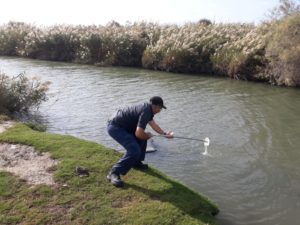
Together with the Navy's 'Silent People' group, whose divers were harmed in the Kishon, the campaign led to a public outcry as well as several large-scale demonstrations that led to the re-prioritization of the issue on the municipal level as well as in the Knesset. Zalul's report on the river's polluted soil forced the Ministry of the Environment to thoroughly investigate the damage and its future impacts.
Stopping pollution of the Naaman River:
The Naaman River, one of the most polluted rivers in Israel, is located in Acco in northern Israel. Several villages and factories dump sewage into the Naaman River at the combined amount of over 6 mcm/year. The campaign resulted in Acco's construction of its first sewage treatment facility and the dismissal of the CEO of Miluban, one of the most polluting factories in the region. Zalul will continue to monitor the area's rehabilitation until normal conditions are resumed.
Herzliya Municipality's pollution of the Mediterranean:
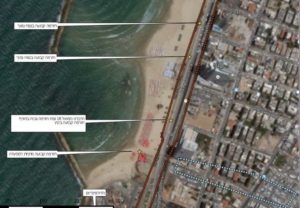
The city of Herzliya's sewage treatment facility is working at over-capacity, resulting in frequent sewage spills into the sea, near some of the most popular beaches in Israel. The treatment of the sewage is only partial, and 7 mcm/year of unsuitably treated water is being dumped 600 meters off-shore into the Mediterranean. The campaign urging Herzliya to take action has led to a legal battle and a great deal of public awareness and support.
Stopping the Shafdan from Spilling Sludge into the Mediterranean:
Shafdan, the largest waste-treatment facility in Israel and one of the biggest in the world, spills sludge into the Mediterranean. Zalul initiated a campaign that involved thousands of Israeli citizens, with banners hanging from hundreds of balconies, bumper stickers on thousands of cars, and demonstrations against the pollution of the sea. The campaign brought an end to a long-lasting problem by offering an alternative treatment to the sludge. A lawsuit filed by the state against the previous director of the Shafdan, whose negligence caused raw sewage to flow into the sea for over two weeks in the winter of 2003, is setting a precedence in Israel.
Defending the Mediterranean from Land-Based Pollution:
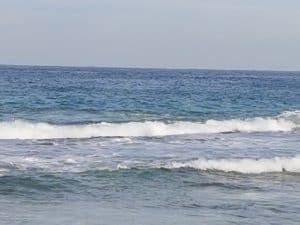
According to the Sea Report published by Zalul in 2006, 80 factories and municipalities have a permit to legally spill their sewage into the sea. Besides the permitted sewage that is spilled, a substantial amount of untreated sewage is spilled into the sea illegally due to poor enforcement and lack of ramifications for the offenders. This campaign intends to substantially reduce the flow of pollution from these sources over a three-year period.
Protecting the Lachish River:
“Don’t Say Kaddish for the Lachish” is Zalul’s slogan for the campaign to save the Lachish River running between the cities of Ashkelon and Ashdod. After an in-depth study was undertaken to determine the pollution sources and the variety of pollutants, a major public campaign was begun with wide-media coverage. Pressure from the public has led to the involvement of the Mayor of Ashdod and the Ministry of the Environment in the creation of the Lachish Committee, headed by the Mayor and responsible for the river’s rehabilitation – since it’s creation, the Mayor of Ashdod has now pledged to completely eliminate all pollution of the river by the municipality by summer 2008.
Protesting the ALA Pipeline in Acco:
An ancient city, Acco has relied on the gulf that it has neighbored since biblical times. Now that gulf is in great danger of turning into a sewage pool due to a pipeline built to carry sewage from regional factories directly to the sea. Over 10,000 Acco residents signed a petition protesting the operation of the ALA Pipeline and the sewage spilled into the Gulf of Acco as part of Zalul’s campaign. This campaign has received enormous support from both the residents and local leaders, notably the mayor, of this UNESCO World Heritage Site.
The Zalul Team:
Yariv Abramovich, Executive Director Yariv has served as Executive Director for Zalul since 2003. Before coming to Zalul, Yariv worked as a lawyer at a leading Israeli firm. He also has an extensive background in business management. Yariv is dedicated to bringing effective management strategies to Zalul, and to increasing its productivity and effectiveness. Yariv has an LLB from Bar Ilan University and an MBA from the College of Management.
Ezer Fischler, Regional Coordinator Northern Israel Ezer coordinates Zalul activities in the northern region of Israel from Zalul's office in Haifa. He is currently leading the campaign against the ALA Pipeline and the pollution of the Naaman River near Acco. Ezer graduated with an MSc degree in Environmental Planning from the Technion - Israel Institute of Technology.
Sagit Rogenstein, National Project DirectorSagit coordinates Zalul activities in the central region of Israel, and manages all of Zalul's special projects, including web-based communications and fundraising. She has been with Zalul since 2004. Originally from Los Angeles, Sagit has a BA in Communications from the University of California Santa Barbara and an MA in Communications from Hebrew University in Jerusalem. She has been involved in the Israeli environmental movement since her arrival to the country in 1997.
Shahar Brinenberg, Project Coordinator Mediterranean Sea Shahar coordinates the campaign against land-based pollution to the Mediterranean Sea, a project generously supported by the Richard and Rhoda Goldman Fund. Shahar has an LLB-BA in Law and Behavioral Sciences from the College of Management in Rishon Letzion. He previously worked at IRAC – Israeli Religious Action Center in Jerusalem dealing with social justice and human rights issues.
Hannah Schafer, Grants and Resource Development Coordinator Hannah is responsible for fundraising and development at Zalul. She comes to Zalul with an extensive background in environmental research, education, and activism in Israel and the United States. She is a graduate of the Arava Institute for Environmental Studies and serves as the coordinator for the Arava Peace and Environment Network. Hannah moved to Israel from Portland, Oregon in 2006.
Gital Gerbi, Office Manager and Director's Assistant Gital oversees all administrative details of the Zalul offices in Ramat Gan and Haifa. She is also responsible for maintaining Zalul's Hebrew website and Zalul's Israel donor database. She has a BA in Sociology/Anthropology and Information Sciences from Bar Ilan University. She has been working for Zalul since October 2006.